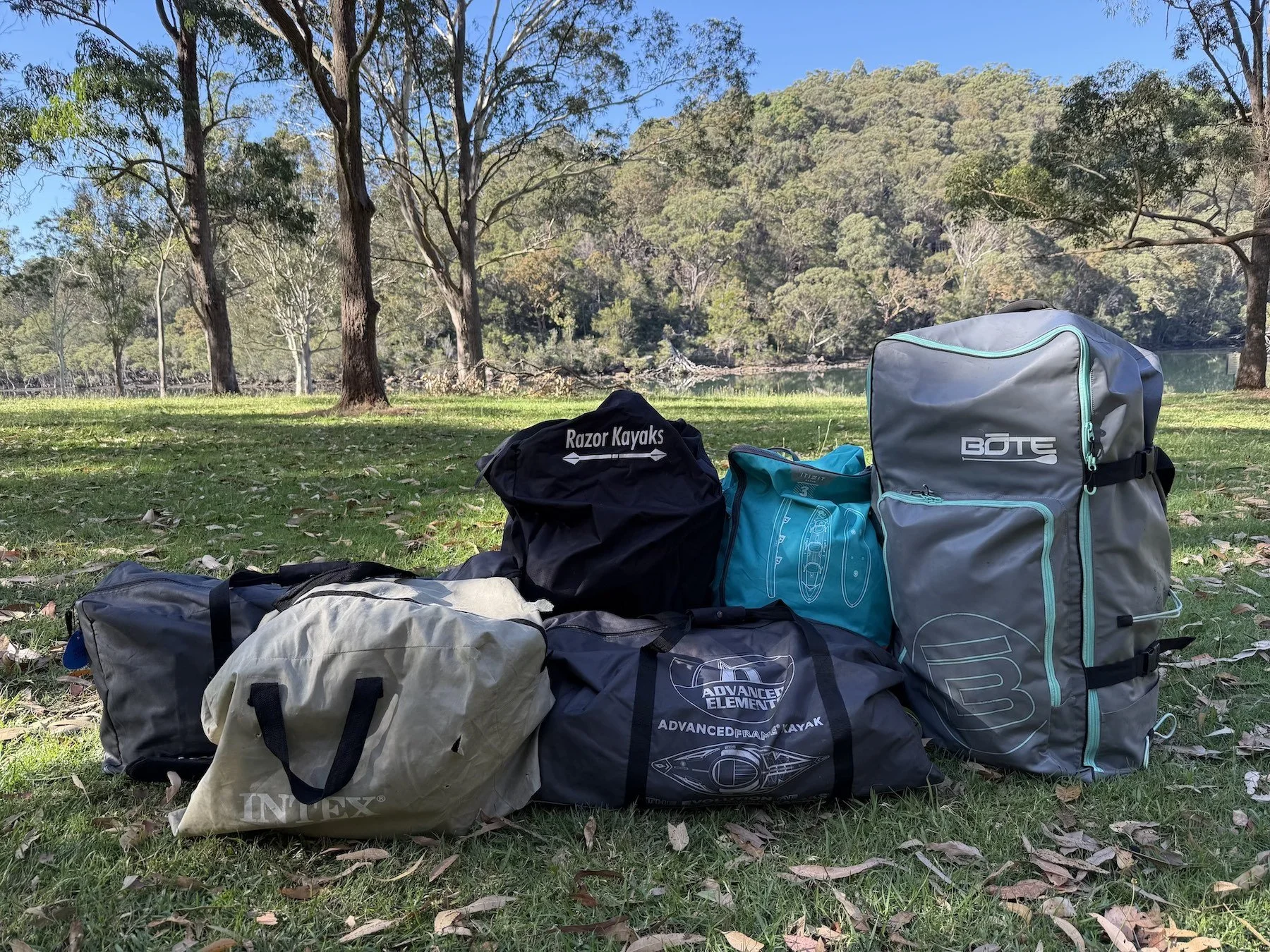

Everything You Need to Know About Inflatable Kayaks in the UK
This guide is part of our explainer series, where we take a closer look at specific bits of kit, which, in this case, is inflatable kayaks.
We’ve put this article together to be a solid go‑to resource for anyone hoping to understand inflatable kayaks better, whether you’re brand new to paddling and thinking about buying your first kayak, or more experienced and looking to compare what’s out there.
Here, we’re focusing specifically on inflatable kayaks our UK conditions. That means you’ll find insights from our own testing on how different materials cope with colder water, changeable weather, salt exposure and the realities of transport and storage in our climate.
We’re really trying to provide an in-depth, evidence‑based look at every aspect of inflatable kayaks, including their background, types, construction materials, safety, test results and the regulations that apply across the UK.
You can jump to any section using the links!
An inflatable kayak is a lightweight watercraft made up of several air chambers, usually between two and eight, that keep it buoyant and give it its shape. While early or cheaper models tended to feel more like pool toys than proper kayaks, the introduction of drop‑stitch technology (which makes the hulls far more rigid) has completely changed the game. These days, a good inflatable can hold its own against many traditional hard‑shell kayaks.
For UK paddlers, inflatables come with a few clear advantages:
They’re great for anyone short on space as they’re easy to store in a flat, garden shed or garage.
You can carry and set one up without having to hoist a heavy kayak onto a car roof.
They’re perfect for travelling, whether you’re driving to the Lake District, hopping on the train to the coast, or exploring Scottish lochs.
They pack down neatly for sailing trips, campervan adventures, or weekend getaways.
Depending on the model, inflatable kayaks work brilliantly on calm lakes, slow‑moving rivers and sheltered coastal waters. Some are even designed to tackle whitewater, so there’s plenty of scope no matter how you like to paddle.

So how do inflatable kayaks differ from hard‑shell kayaks, packrafts or stand‑up paddleboards (SUPs)? The most obvious difference from hard shells is that inflatables can be deflated and packed down much smaller, which makes them far easier to store and transport. This is a big win in the UK, where many of us live in flats or rely on trains and smaller cars to get to our paddling spots. Inflatable kayaks also tend to be easier and cheaper to repair than hard‑shell models.
Packrafts, on the other hand, are usually much lighter and pack down smaller than inflatable kayaks. They’re built for maximum portability rather than long-distance paddling in a straight line, so they’re not as efficient or stable for covering distance on open water.
SUPs are typically made from a drop‑stitch floor with no side tubes and are designed for standing rather than sitting. You can also find SUP‑kayak hybrids, which generally work well as SUPs but can feel a bit more cumbersome to paddle when used as kayaks because of their wide, flat shape.
Inflatable kayaks are perfect for anyone after a portable craft for recreational outings or day trips, and some are even suited to multi‑day adventures. There are various models built for specific purposes, from relaxed recreation and touring to tackling rivers, choppy water, coastal stretches and even whitewater. You can read more in our Types of Inflatable Kayaks section.
| Feature | Inflatable Kayaks | Hard Shell Kayaks | Packrafts | SUPs/SUP-kayak hybrids |
|---|---|---|---|---|
| Portability | Pack down to fit into the boot of a small car, large backpack size | Don't pack down (unless modular) - need to be transported on roof racks | Extremely lightweight and pack down into a small backpack for hiking, cycling and other remote journeys | Similar to inflatable kayaks but usually slightly larger |
| Paddling performance | The best models prioritise paddling efficiency, straight-line tracking and manoeuvrability for covering longer distances and enjoying recreational paddling. Some models handle whitewater and coastal chop | Recreational hard-shells prioritise paddling efficiency, stability and manoeuvrability, performance hard shells are built for excellent straight-line tracking | Allow you to access remote waterways and some models can handle whitewater, however there are generally trade-offs in straight-line tracking and they're a lot harder to cover longer distances in | Extremely stable but difficult to turn and harder to push forward through the water. Specifically for those who want to be able to choose between standing and sitting to paddle |
Kayaking has roots in several ancient cultures, where it was first developed as a way to gather food and explore waterways. Early kayaks were built from whatever natural materials were available, such as wooden frames, animal skins, bark, hollowed‑out trees or woven cane, depending on the environment.
The idea of inflatable boats has been around for centuries too. Ancient troops in Assyria, Persia and Central America are known to have used inflated animal skins to cross rivers. In the 1840s, Lieutenant Peter Halkett designed a portable craft made from rubber‑coated cloth that could be worn as a cloak or carried in a bag, then inflated into a small boat for river crossings.
The first commercial inflatable boats appeared around the 1930s with the French company Zodiac, which had previously made airships. Around the same time, American inventor Waldo Semon developed plasticised PVC, a flexible and waterproof material that became crucial in shaping the first true inflatable kayaks.
A later breakthrough came with the invention of drop‑stitch fabric, which made it possible to build flat, high‑pressure inflatable panels. Originally used in aviation, this technology gave inflatable kayaks a much stiffer and more stable hull, dramatically improving how they handled on the water.
In the UK, inflatable kayaks grew out of the European tradition of folding boats, known as Faltboots, which used fabric stretched over wooden frames. The German manufacturer Johannes Klepper helped popularise these in the early 1900s. British paddler and explorer John MacGregor had already brought attention to portable, non‑rigid boats as early as 1860, and by the 1960s, inflatable kayaks gained real momentum in the UK. Their open design made them more approachable for newcomers, especially compared with heavy, enclosed hard‑shell kayaks.
As materials and build quality improved, inflatables evolved from simple river‑rental models into reliable, high‑performance craft now used on lakes, rivers and coastal waters across the country.
Types of Inflatable Kayaks
Understanding the different types of inflatable kayaks will help you choose the one that best suits your needs. Think about how and where you plan to use your kayak most often. We’ve provided a brief look into some of the various types below.
-
Usually a shorter, wider shape
Built for stability and manoeuvrability rather than speed and efficiency
Often more affordable, although there are also high‑quality recreational options available
Versatile enough for different types of water
-
Longer, narrower hulls designed for covering distance
Often include drop‑stitch floors and multiple valves or air chambers
Focus on straight‑line tracking, speed, load capacity and paddling efficiency
Best without self‑bailing ports, as these can add drag along the hull and slow you down
-
Broad and stable platforms with attachment points for gear such as rod holders
Reinforced hulls to handle weight and resist abrasion
Usually have more deck space or utility features
Often fitted with raised seats for a better fishing position
Should always have a drop‑stitch floor for maximum stability when casting or reeling in
-
Self‑bailing designs are best, with drainage ports in the floor to let water escape
Made from tough, abrasion‑resistant material
Shorter hulls for turning quickly through tight spaces
Slightly wider shape for improved stability in rough water
-
Folding kayaks: Use collapsible frames or hinged panels rather than inflation. They can take some practice to assemble and the folds may wear over time depending on quality. When set up, they perform well, but if they capsize they are likely to sink, so they’reless suitable for surf or whitewater.
Modular (clip‑together) kayaks: Made from rigid sections that connect with clips and waterproof seals. They are bulkier and heavier to move but provide solid performance once assembled, great for paddlers who usually launch from a nearby car park.
Hybrid inflatable‑rigid kayaks: Combine inflatable sections with rigid frames or panels for improved stiffness.
SUP‑kayak hybrids: Essentially stand‑up paddleboards with seating attachments. They have large, flat hulls and are fine for gentle paddling, but not especially efficient as kayaks.
| Type | Typical Use | Stability | Speed | Portability | Who It's For |
|---|---|---|---|---|---|
| Recreational | Enjoyment, family use, leisurely exploration | Stable | Can be slower, but drop-stitch models are fast | Very portable | First-time or casual paddlers, those covering shorter, more relaxed distances, families and pet owners, those who value stability |
| Touring | Covering longer distances, day- or multi-day expeditions | Can be less stable | Faster | Still portable, but often heavier than recreational kayaks | More experienced paddlers or those who want to cover longer distances more efficiently, fitness paddlers, multi-day paddlers |
| Fishing | Fishing, leisurely paddles | Very stable | Slower | Still portable, but often heavier than recreational kayaks | Those who mainly want to use their kayak to fish from |
| Whitewater | Lower grade to more technical whitewater | Stable | Slower | Very portable | Beginner to expert whitewater kayakers |
| Folding | Depends on hull shape but generally recreational or touring (lower weight capacity than a touring inflatable) | Can be less stable | Depends on shape but smooth surface can be very fast on a longer hull | Very portable | Those who prefer not to use or purchase a pump |
| Modular | Recreation | Stable | Medium | Bulkier and heavier | Those looking for a hard-shell kayak that can fit in a car boot |
| SUP/kayak hybrid | Choice between standing to paddle or a leisurely kayak | Very stable | Slow | Depends on design, ranges from very portable to relatively bulky | Those primarily wanting a stand-up paddleboard, but with the option of being able to sit and paddle |
The shape of an inflatable kayak’s hull has a big influence on how it performs on the water, how stable it feels and what sort of paddling it suits best. There are a few main types of hull shape, and although each has its own variations, most inflatable kayaks fall into one of these groups.
An i‑beam hull uses a floor made up of long internal tubes or beams that run from the bow to the stern. These help hold the two sides of the floor together so it doesn’t bulge out when inflated. Modern drop‑stitch construction achieves the same goal but in a more advanced way. On either side of the floor are larger side tubes that add buoyancy, stability and structure. These are usually inflated to around 1–3 psi, which can make the kayak feel a little soft underfoot.
Most i‑beam hulls are made from vinyl or fabric‑covered vinyl and are common in lower‑priced kayaks. Some European brands, such as Gumotex and Grabner, use stronger materials that create a firmer structure. Advanced Elements also uses i‑beam floors in many of its models, strengthened with internal aluminium ribs for extra shape.
I‑beam kayaks are usually lighter than drop‑stitch ones, as drop‑stitch fabrics contain lots of internal threads that add weight. They cannot, however, hold as much air pressure, so they tend to feel softer and don’t paddle quite as smoothly.
Best for: Beginners or anyone looking for an affordable, entry‑level kayak.
I‑beam hulls

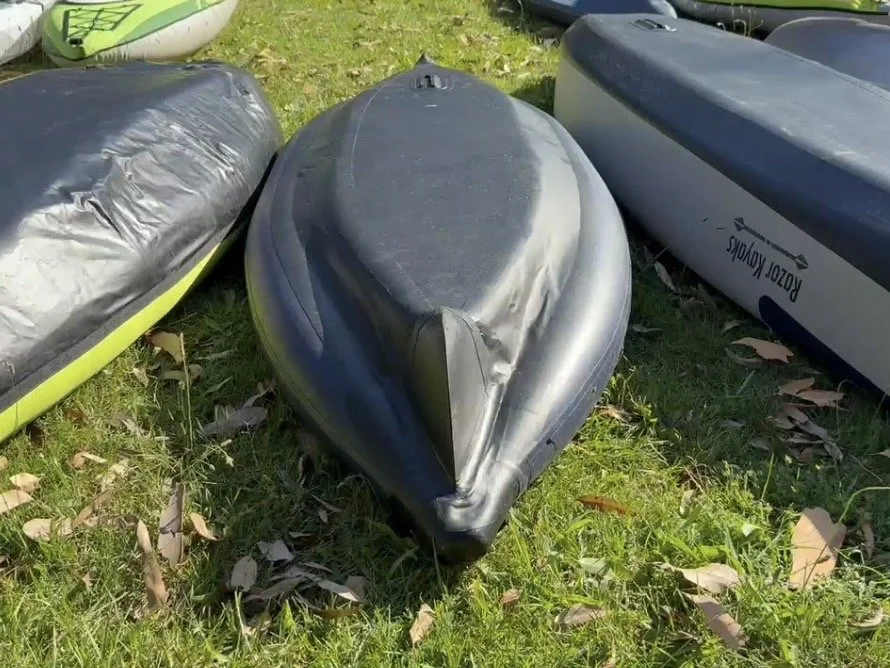
In this type of hull, the drop‑stitch floor creates a firm, flat surface, while the side tubes add balance and buoyancy. Some manufacturers strengthen the design further by adding hard plastic caps to the bow and stern.
These kayaks are usually made from fabric‑covered vinyl or high‑grade PVC. The combination gives good all‑round performance and a stable feel, so it’s often used for recreational or fishing kayaks. The hollow side tubes can help keep the weight down, depending on the materials used.
Best for: New or casual paddlers who want something stable for lakes, slow rivers or relaxed fishing trips.
Drop‑stitch floor and side tubes


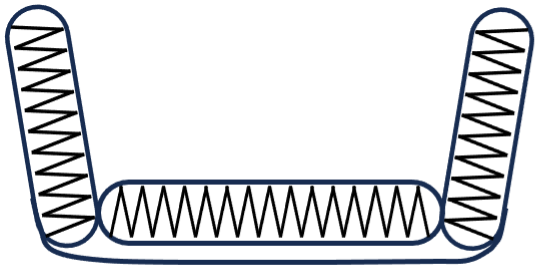
This hull style uses three flat drop‑stitch panels joined together to form a sort of bathtub shape. These kayaks are usually made from tough PVC with a smooth, quick‑drying finish and firm bow and stern caps. They inflate to a higher pressure (usually between 8 and 10 psi) which makes them quite stiff and responsive to paddle.
The design is generally longer and narrower, which helps the kayak move quickly in a straight line. Performance varies between models depending on the width of the hull, the angle of the side walls and the bow or stern shape. The main trade‑off is that they can feel a bit less steady, as once the kayak tips off the flat centre floor, it naturally rolls towards the next flat side panel.
Best for: Touring or fitness paddlers who like covering distance.
‘Bathtub’ Shape Drop‑stitch Hulls

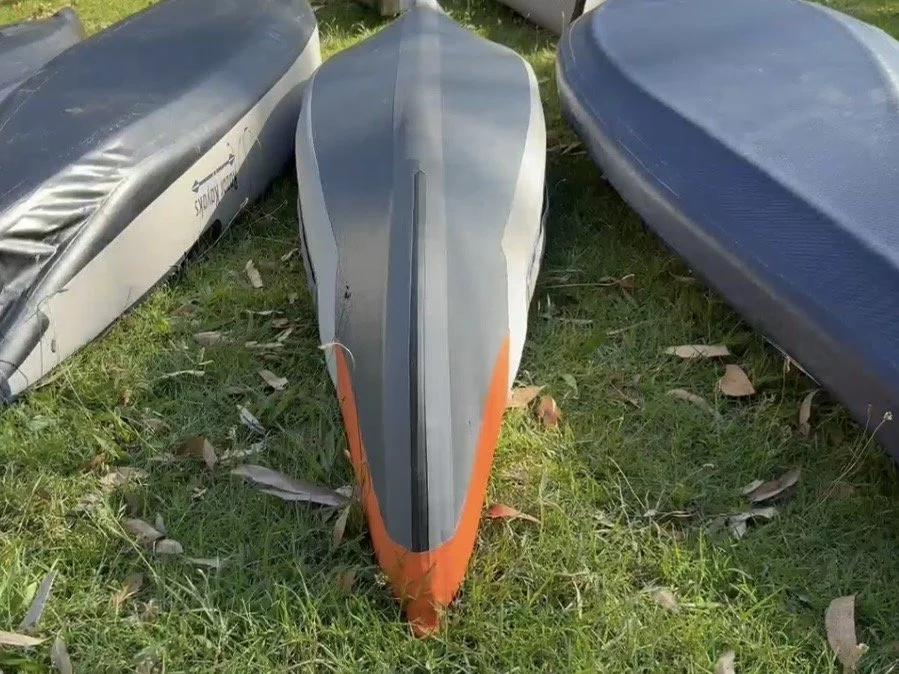
V‑shaped hulls are made by connecting several drop‑stitch panels or by shaping sections to form a V at the front and back while keeping a flatter middle section. The pointed ends create a built‑in keel effect that helps the kayak travel straight through the water, with the PVC outer providing a smooth surface.
These kayaks can move quite swiftly but tend to feel more unstable, especially longer and narrower models. There is also a trade‑off between tracking straight and being easy to turn, so while they travel well in a straight line, they can take more effort to manoeuvre.
Best for: Paddlers who enjoy longer distances on calm water.
V‑shaped Hulls
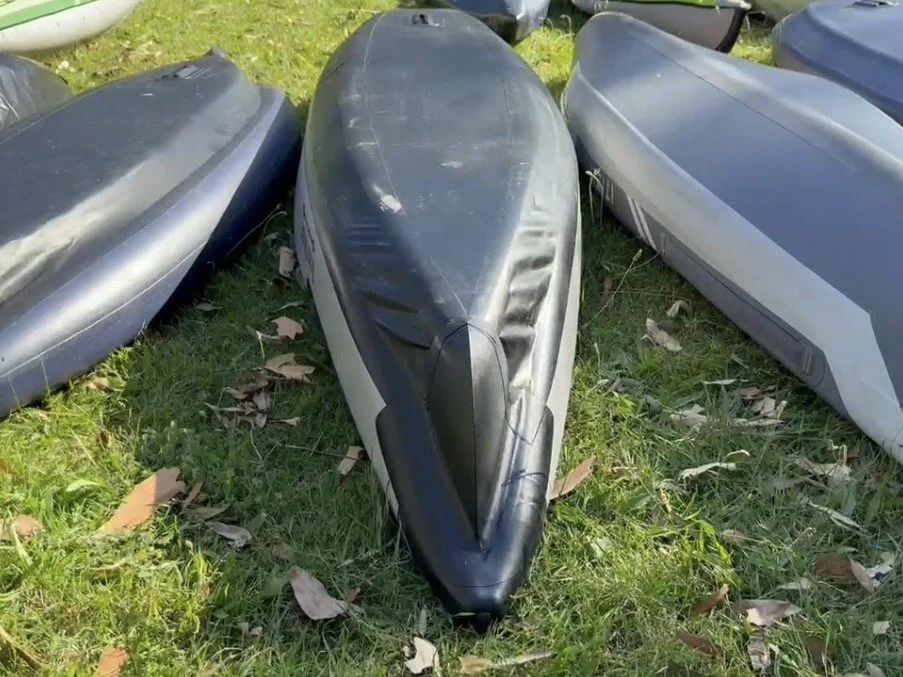
Curved drop‑stitch hulls are a newer development in inflatable kayak design. They use shaped folds in the drop‑stitch panels to mimic the smooth curves of a hard‑shell kayak while keeping setup simple and structure strong.
Thanks to their high‑pressure build, these kayaks move smoothly through the water, and the curved underside adds a sense of balance not usually found in other full drop‑stitch designs. They also track straight but remain easy to handle, giving a good blend of speed, control and comfort.
Best for: All‑round paddlers looking for a mix of speed, stability and easy handling across a range of water types.
Curved Drop‑stitch Hulls

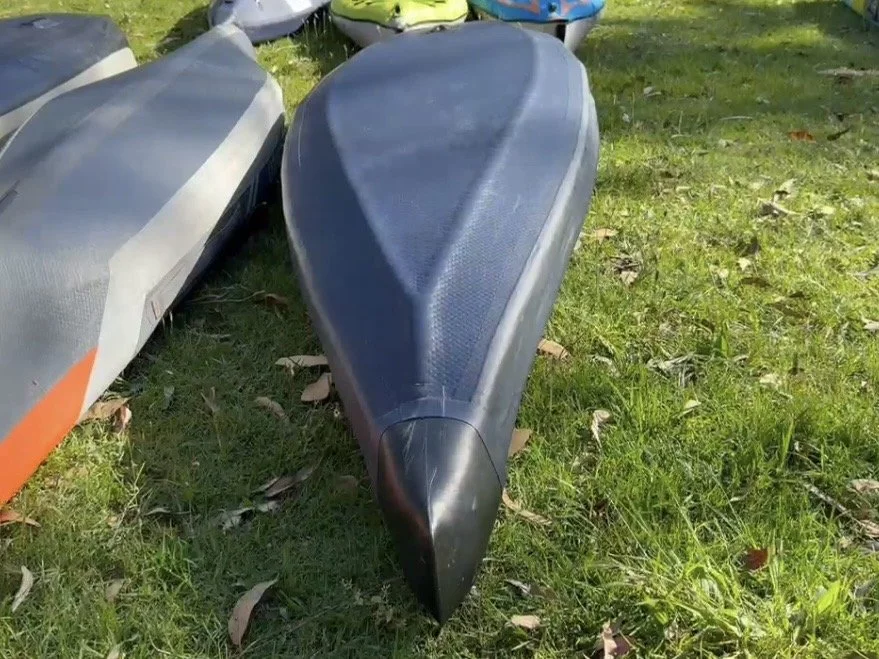
View from the bow of a typical hard‑shell kayak hull design, showing the similar profile to a curved drop‑stitch hull.
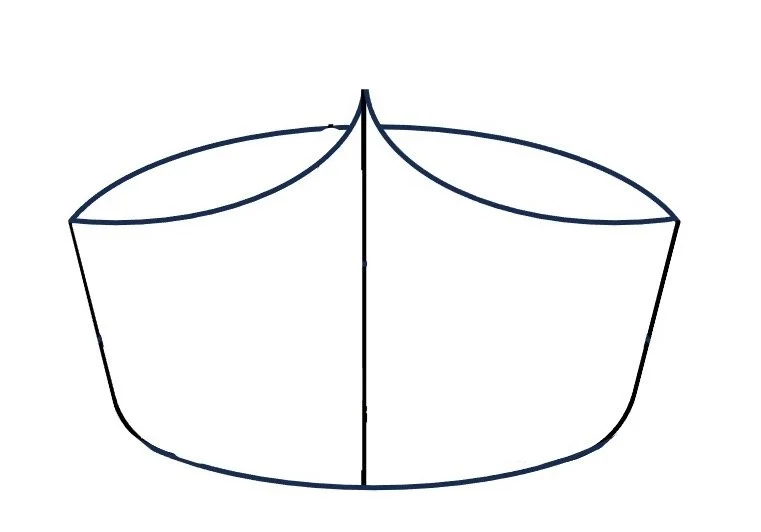
| Hull Shape | Paddling Efficiency | Speed | Stability | Manoeuvrability | Best For |
|---|---|---|---|---|---|
| I-Beam Hull | Low to Moderate: Lower pressure (1–3 psi) creates a softer floor and more flex, reducing efficiency | Moderate | High: Large side tubes give strong primary stability | Moderate: Softer structure can feel less precise when turning | Beginners wanting affordable, entry-level kayaks |
| Drop-Stitch Floor + Side Tubes | Moderate to High: Rigid floor improves power transfer compared to i-beam | Moderate to Fast | High: Side tubes offer strong stability, popular for fishing | Moderate: Stable but not overly reactive | Beginner, recreational and fishing paddlers |
| ‘Bathtub’ Shape Drop-Stitch | High: Inflates to 8–10 psi, very stiff and efficient | Fast: Longer, narrower profile improves glide | Moderate to Low: Less forgiving once tilted off flat surface | Moderate: Tracks well but less forgiving in turns | Touring and fitness paddlers |
| V-Shaped Hull | High: Keel-style design improves tracking and glide | Fast: Excellent straight-line performance | Low: Can feel tippy, especially narrow models | Low: Harder to turn due to strong tracking | Long, straight paddles on calm water |
| Curved Drop-Stitch Hull | Very High: High-pressure structure with hard-shell-like shape | Fast: Efficient through water | High: Curved underside improves secondary stability | High: Tracks well but still responsive in turns | All skill levels wanting balance and versatility |
Materials
There are a few groups of materials used in inflatable kayaks, each with its own feel and lifespan. For UK paddlers, it is worth thinking about how often you will be out on the water, and how much storage and transport your kayak will go through.
Vinyl
Vinyl is the lowest cost material and is very common in entry‑level inflatable kayaks. It is light, flexible and fairly straightforward to glue, heat weld and repair with patches. You will recognise the basic form of vinyl from things like lilos and paddling pools. The thickness of the vinyl makes a big difference to how long it lasts: smoother, thinner vinyl tends to be less robust, and all‑vinyl kayaks usually have a shorter lifespan than those made from tougher fabrics. Vinyl also ages more quickly under strong sunlight and in salty conditions, which is worth bearing in mind if you plan to paddle a lot on the sea.
Fabric‑covered PVC
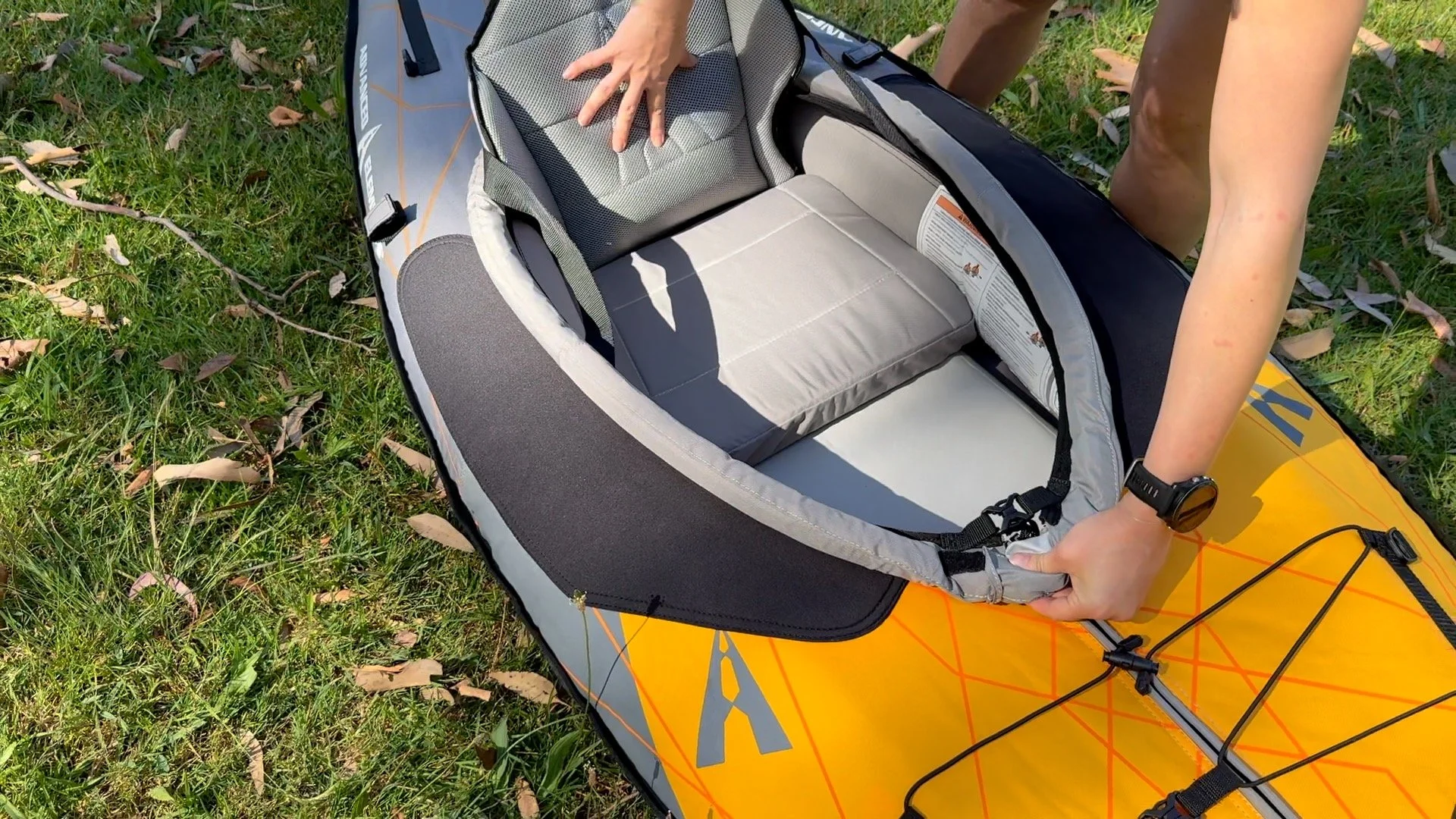
Fabric‑covered PVC uses inner PVC tubes inside a fabric outer skin, often a heavy polyester. The fabric layer adds protection against knocks and scrapes, and some paddlers like the softer feel underfoot and along the sides. On certain models you can unzip the cover and replace the inner tube if it is badly damaged. The downsides are that the textured fabric can create more drag in the water, and it takes much longer to dry than bare PVC or vinyl. If packed away damp it is more likely to develop mould, which is a particular concern in cooler, humid UK weather.

Reinforced PVC
Reinforced PVC uses a strong woven mesh inside thick PVC, often around 1000 denier, to create a tough inflatable fabric. It is the sort of material you might see on the side tubes of rescue or work boats. It is harder to puncture, smooth on the outside and dries quickly. This type of PVC is a little heavier and more expensive than lighter grades, but the extra toughness and smoother movement on the water make it a popular choice for higher‑quality inflatable kayaks in the UK.

Nitrylon
Nitrylon is a more eco‑friendly material made from synthetic nitrile rubber laminated to a strong polyester fabric. It is heavier than standard PVC but offers very good resistance to punctures and abrasion, which suits frequent use on rivers with stones, branches or gravel banks. Nitrylon also tends to last longer than PVC and is often used for floors and side tubes where wear is greatest.
Hypalon/CSPE
Hypalon (also referred to as CSPE in newer products) is a very durable, UV‑resistant material that copes well with chemicals and long‑term exposure to sunlight and salt. It is usually found on higher‑end or heavy‑duty inflatables, including some used in commercial or professional settings. For UK paddlers who are out in all seasons, Hypalon can stand up well to repeated use and varied conditions, though it usually comes at a higher price point.
Drop‑Stitch Fabric
Drop‑stitch fabric is used to create flat, high‑pressure panels that feel almost like a rigid board when inflated. Thousands of tiny threads connect the top and bottom layers, stopping them from bulging out and allowing much higher pressures than standard air chambers. In kayaks, drop‑stitch floors or full drop‑stitch hulls give a firm platform that helps the boat move cleanly through the water and feel more composed, especially on open water or in wind. We take a deep-dive into What is Drop-Stitch in our video if you want to learn more.
| Material | Durability | Drying Time | In-water Performance | UV Resistance | Weight | Price |
|---|---|---|---|---|---|---|
| Vinyl | Poor | Fast | Smooth | Poor | Very light | Cheap |
| Fabric-covered PVC | Good | Slow | Can have drag | Depends on fabric used (look for UV-stabilised) | Heavier | Medium |
| Reinforced PVC | Good | Fast | Smooth | Good | Medium | More expensive |
Construction Methods
Inflatable kayaks are put together in a few different ways, and the construction makes a real difference to how long they last and how they feel on UK waters.
Seams
Most seams are either welded or glued. Heat welding is common with vinyl and PVC: the material is warmed until it softens, then pressed together so it fuses into a single piece. This type of seam usually lasts longer than basic glued joins. In the last decade, purpose‑made PVC glues have improved a lot, and when used correctly they can create a very strong bond too.
Drop‑stitch
Drop‑stitch is a way of making a high‑pressure inflatable panel, where two strong PVC layers are linked on the inside by thousands of tiny polyester threads. When you inflate the chamber, the threads stop it from bulging into a round shape and hold the surfaces flat instead. The result is a stiff platform with much less flex, so more of your paddle stroke is translated into movement and the kayak keeps its shape when loaded with kit or an extra passenger. Kayaks that use drop‑stitch in the floor or throughout the hull can feel noticeably closer to a hard‑shell boat on UK lakes, canals and coastal stretches.
Valves
Inflatable kayaks use a few main valve types, which affect how you inflate and deflate the boat:
Halkey‑Roberts‑style valves: Often called push‑push valves, these have a spring‑loaded central pin that you press to switch between inflation and deflation. Around the base are small notches where the pump fitting locks in. They are designed to handle higher pressures, so you usually see them on drop‑stitch floors and other chambers that run somewhere around 5 to 15 psi. Some brands use their own version that looks similar (such as Advanced Elements) but is a slightly different size, so it is always worth checking that your pump fittings match your specific kayak
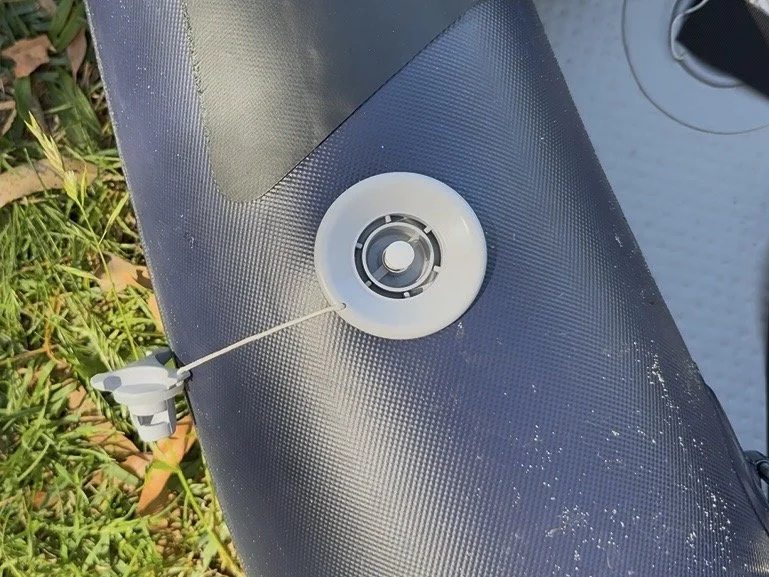

Boston valves: These have two caps that screw into a base. With just the top cap removed, the valve stays closed and you can pump air in. When you remove the lower section from the base, the valve opens fully and lets air rush out for quick deflation. The pump fitting usually pushes in as a smooth cylinder with no locking notches. Boston valves are common on lower‑pressure chambers, such as side tubes that sit around 1 to 3 psi.

Twist‑lock valves: These are small valves used on things like inflatable seats or inflatable coamings on sit‑in cockpits. You open them by twisting the top of a slim tube and close them with a twist in the other direction. They do not take long to inflate but are really just for small sections rather than the main hull.
Considerations for UK Conditions
UV exposure: Even strong materials can fade and weaken under long summer days on UK reservoirs or coastal waters, when it decides to come out to play. Still, if your kayak has a fabric cover, make sure it is UV stabilised so it does not bleach, sag or tear after repeated exposure. Otherwise, choose a kayak made from mesh‑reinforced PVC that stands up better to sunlight over multiple seasons.
Cold and damp weather: At the other end of the scale, lower temperatures make inflatable materials stiffer and more prone to cracking if they are left folded for long periods. In winter storage, keep your kayak somewhere frost‑free if possible, such as a garage or shed, and consider partially inflating it loosely to avoid permanent creases. Damp conditions also increase the risk of mould, especially on fabric‑covered hulls, so thorough drying is essential before packing away.
Rock abrasion and launches: Many UK rivers, lochs and coastal spots have rocky shores, gravel banks or weed that can wear at the hull. Choose materials that can handle regular dragging or shallow scrapes, such as fabric coverings or high‑grade reinforced PVC, so your kayak lasts longer without needing major repairs.
Salt exposure: Saltwater around the UK coast will gradually corrode any metal fittings or accessories over time, even marine‑grade stainless steel. It can also stiffen fabrics like polyester, though heavy PVC copes much better. Always rinse your kayak with fresh water after every saltwater trip to prevent buildup. See our Maintenance and Storage section for more details.
Wind and chop: Open water on UK lakes and estuaries often brings wind and small waves. Drop‑stitch floors and narrower hulls tend to cut through chop better and feel more planted, while wider designs with side tubes give reassurance when the water gets lively.
On the Water:
Performance Factors
Now that we have covered materials and hull shapes, let us look at how they affect a kayak’s feel and handling on the water.
-
Speed is all about how easily the kayak moves through the water for the effort you put into each paddle stroke. A smoother, more streamlined hull will carry you further with each stroke, and this usually comes from a longer, narrower design with a clean surface.
Look For: Curved drop‑stitch, bathtub or V‑shaped hulls covered in reinforced PVC. These tend to slice through the water on UK lakes and coastal waters with less resistance.
-
Tracking describes how well the kayak holds a straight line without you needing to keep correcting your course with the paddle. A good kayak glides forward steadily with little wandering. Some have built‑in features like keels or curves in the hull to help with this, and most come with a removable skeg (a small fin at the back) that makes a noticeable difference to straight running.
Look For: Kayaks with removable skegs, whatever the hull type. Drop‑stitch floors also help by staying firm and cutting cleanly through chop.
-
There are two main kinds of stability: primary and secondary. Primary stability is how steady the kayak feels in calm water or light chop, when it is only leaning a little from side to side. Secondary stability is how it behaves when leant further over, either by bigger waves or when you edge it deliberately for a turn.
Inflatable kayaks handle this differently to hard shells. The big side tubes on many designs give good secondary stability if you do tip, while flat‑walled bathtub or V‑shaped drop‑stitch hulls can feel less secure once they move away from upright, as they tend to keep rolling until they hit the next flat surface. Curved drop‑stitch hulls are different: their gentle shape helps the kayak settle back to upright whether it is calm or wavy.
Look For: Curved drop‑stitch hulls or designs with a drop‑stitch floor plus side tubes.
-
Manoeuvrability is about how easily you can turn the kayak. Can you just dig in your paddle and spin around, or does it take quite a few strong strokes to change direction? This matters more if you are paddling whitewater, tight river bends or want something playful for kids on a lake. Shorter, wider hulls turn much more readily than long, narrow touring designs, and built‑in keels can make turning harder.
Look For: Curved drop‑stitch hulls, i‑beam floors with side tubes or drop‑stitch floors paired with side tubes.
-
If you are a bigger paddler or plan to carry heavier gear for multi‑day trips around the UK, think about how the kayak behaves when loaded up. Some models sit lower and feel more sluggish near their maximum weight. Drop‑stitch kayaks generally handle heavier loads better than basic inflatables because their stiff construction resists bending or flexing under weight. Full drop‑stitch hulls tend to take the most load, and the hull shape also plays a part since extra weight changes how deep the kayak sits in the water. Some kayak may be designed for perfect paddling efficiency at 50% load may be sitting much lower in the water and perform much less efficiently at 80–100% load.
Look For: Full drop‑stitch hulls, curved drop‑stitch or V‑shaped designs.
Inflation Time
Inflation time depends on a few things, including the type of pump, your experience and the air pressure needed. For instance, a stronger paddler using a triple‑action hand pump will get the kayak inflated faster than someone using a double‑action pump. We cover the main pump types further below.
Higher‑pressure chambers take a bit longer to fill as they need more air, but the extra effort pays off with a stiffer and better‑handling kayak.
Inflatable kayaks vary in how easy and quick they are to set up, but in general they are straightforward and don’t take long once you know the routine.
Valve Types
As mentioned in our Materials and Construction section, inflatable kayaks use different kinds of valves depending on the brand and air pressure levels. When a kayak has several kinds of valves, you may need to change the pump attachment, which can slow things down slightly. More valves also mean more inflation points, so the whole process can take longer.
Fitting Additional Parts
Every inflatable kayak needs a few extra pieces added after inflation. At the very least, you’ll need to attach the seat. Solid foam seats are quick to clip in, while inflatable seats take a little more time to blow up and position.
Most kayaks also need footrests. Some clip easily into place or attach with Velcro strips along the floor, while others use solid metal or plastic frames that take longer to fit the first time but can be left in position for future outings.
Certain models use extra plastic parts for structure, such as bow and stern stiffeners or spray guard supports. These can make a difference to how the kayak sits in the water, though they will add a minute or two to your setup. Many kayaks also come with a skeg for better straight‑line tracking. Fitting one is usually quick and simple, with most sliding and locking into place easily. The extra effort is well worth it for the smoother paddling that follows.

Foldable Kayaks
Foldable kayaks take a bit more practice to set up than inflatables, so it is worth watching a video guide for your specific model before you try it the first time. For the first dozen builds or so they can feel quite stiff and may need a bit of strength to clip everything into place, but you soon get used to the routine. The reward is a kayak that feels much closer to a hard shell on the water, which many paddlers enjoy for the way it handles.

Drying Time
Inflatable kayaks need to be fully dry before storage to avoid mould and mildew forming on the material. PVC and vinyl models are fairly quick to sort out, as they can usually be wiped down with a towel and then left to air dry for a short time. Fabric‑covered hulls hold far more water, so they can take many hours or even a couple of days to dry properly, especially in cooler or damp UK weather.
Deflation
Letting the air out of an inflatable kayak is usually simple and quite fast, whatever valve system it uses. How much air you release depends on how you plan to store it: many manufacturers suggest keeping the kayak loosely rolled with a little air left inside, which helps avoid hard creases along the seams. If you want to get it back into its carry bag for travel, you will normally need to press or pump out more air so it folds down small enough. Some brands provide bags that are very compact, while others leave a bit more room, so how tightly you need to pack it can vary quite a lot between models.
Accessories
Pumps come in a few main types, each with its own pros and cons for UK paddlers.
Double‑action hand pumps: These push air into the kayak on both the up and down stroke, so you move air quite steadily with each pump. They are usually the most affordable option and are often included in kayak packages. Of all the pump types, they normally take the longest to inflate a kayak.
Triple‑action hand pumps: These are designed to move a larger volume of air with each stroke, so they can get your kayak up to pressure more quickly than a double‑action pump. The trade‑off is that they need more physical effort, especially towards the end of inflation. Most have settings that let you reduce the air flow to make pumping easier if it starts to feel like hard work. Some kayak bundles in the UK will include a triple‑action pump instead of a basic one.
Car‑powered electric pumps: These electric pumps plug into the 12V socket in your car. They are very handy if you want to avoid manual pumping, as you usually just set the pressure, connect the hose, press a button and let the pump do the work. The downside is that you need to be close to your car whenever you inflate your kayak, which may limit where you can get on the water.
Battery‑powered electric pumps: Older battery pumps often struggled with the air volume needed for kayaks, but newer versions are much more capable. When choosing one, look for a model that charges easily via USB‑C or similar, and if possible has a 12V car adaptor as a backup. It is also worth checking how many full inflations you can get from a single charge so you know whether it will last a weekend’s paddling.
Compressors: If you already own a compressor, some kayak brands sell adaptors that let you use it to inflate their boats. This can be a very practical option at home or in a garage. If your compressor does not have a built‑in pressure gauge, keep a close eye on the kayak while inflating and keep feeling the tubes and floor as you go, so you do not accidentally overinflate it.
Paddles
Paddles are easiest to live with when they are 4‑piece, as breaking them down into four sections means they will fit neatly inside your kayak bag or can be strapped to the outside when travelling to UK launch spots on foot or by public transport.
Aluminium paddles use an aluminium shaft with plastic blades. They are usually the lowest‑priced option and tend to be a bit heavier than fibreglass or carbon fibre.
Fibreglass paddles are normally made entirely from fibreglass, both the shaft and the blades, which keeps them light, tough and pleasantly stiff in the water.
Carbon fibre paddles are very light and strong, with the whole paddle made from carbon fibre apart from the metal joining pins. They are a great choice if you plan to paddle longer distances on rivers, lakes or coastal stretches around the UK, as the lower weight can help reduce arm fatigue.
Note: A quick note on technique: the shorter edge of the blade should go into the water, not the longer one. Also, paddle leashes are not strictly necessary, but if you like to drift, take photos or have regular rest breaks, a leash can be handy to stop your paddle floating away.
Bags work best in a backpack style if you expect to carry your kayak any distance from the car park, train station or your home to the water. For larger kayaks, bags that fully unzip make packing much easier. It is usually more practical for the bag to be slightly too big rather than a tight squeeze so you are not wrestling with it at the end of a session.
Motors can be a really helpful extra if you are covering longer distances, paddling on rivers with a current, or out with children and want a bit of backup power. They usually either fit into the fin slot or mount on the stern of the kayak. Always check that any motor you are considering is designed to work with your kayak, and where possible choose one from the same manufacturer for a straightforward fit.
Fishing rod, camera and gear mounts: Some inflatable kayaks in the UK can take fishing rod, camera or general gear mounts. A few come with bars or tracks already fitted for attaching accessories, although this is still fairly rare. Another option on PVC‑hulled kayaks is to glue mounts directly to the surface using suitable PVC or marine‑grade adhesive, which should be supplied or specified by the accessory brand. Look for plastic fittings or marine‑grade stainless steel if you choose metal so they cope well with damp and salty conditions.
Sails are less common on inflatable kayaks, but some models are compatible with simple sailing rigs. They offer a similar benefit to a motor in that they help you along, but you do need to feel comfortable working with the wind. Before buying, think about how the mast and sail will attach to the kayak and whether they will interfere with your view while paddling.
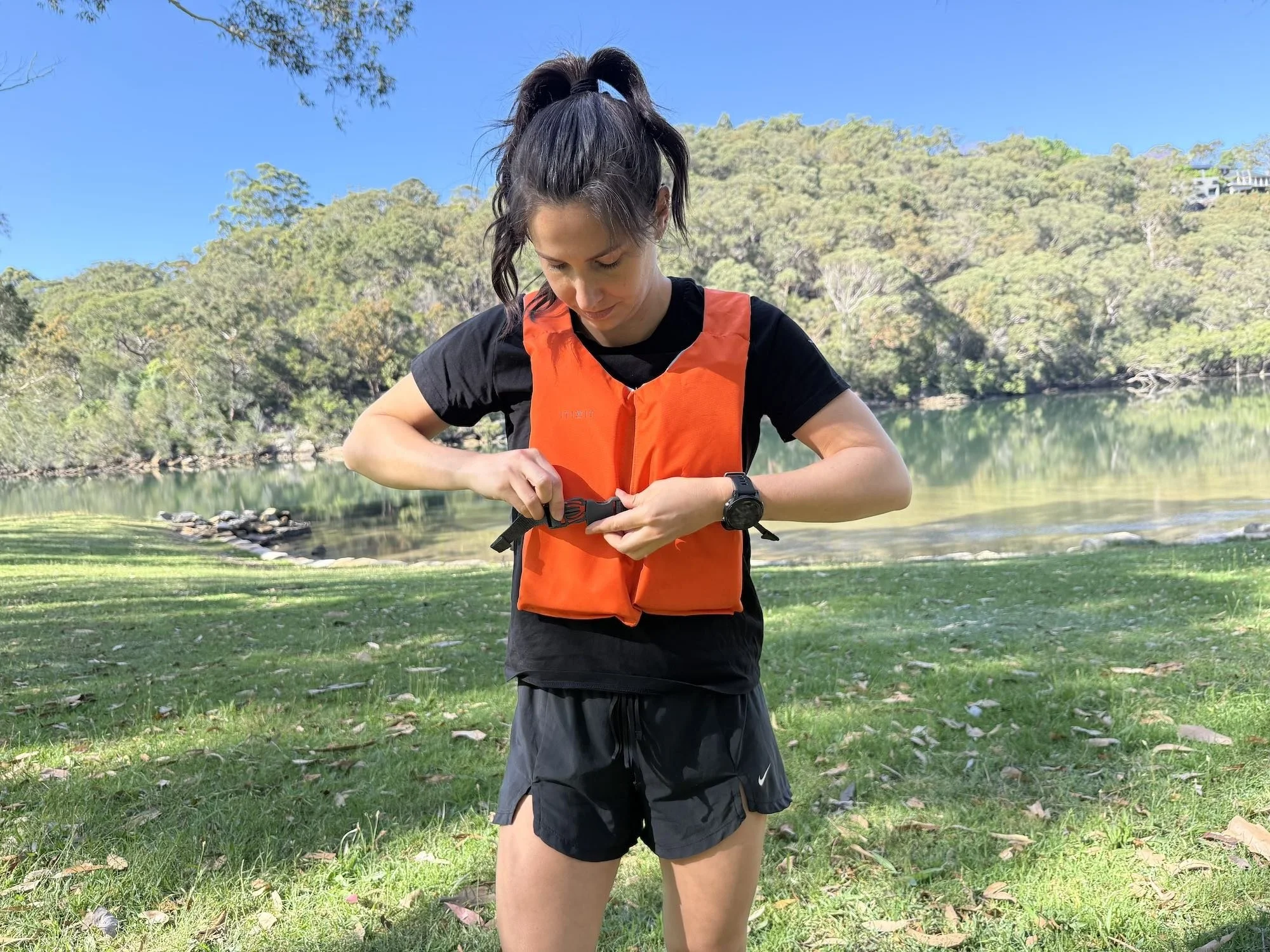
Buoyancy aids are strongly recommended whenever you are on the water in the UK, and various navigation authorities and clubs expect them to be worn as standard. It is worth checking local guidance for the waterways you plan to use, then choosing a buoyancy aid that is rated for paddlesports and fits you properly.
Spray decks (also called spray skirts) are only suitable for sit‑in kayaks with a coaming, which is the raised rim around the cockpit. They are very helpful for staying drier in choppy water, wind or rain. Spray decks come in different sizes, so make sure the waist tunnel fits you comfortably and that the deck is the right size and shape for your kayak’s cockpit.
General Watercraft Safety
Always wear a buoyancy aid. Various UK navigation authorities require them for small craft and they make sense for safety no matter where you paddle. More details on choosing the right one below.
As with any watercraft, stick to the stated maximum weight limit, including paddler, gear and any passengers.
If you are heading out for longer paddles alone on UK waters, let someone know your route and when you expect to be back. Carry your phone in a waterproof pouch if you can.
Be ready for changing UK weather: sun hat, long sleeves and sunglasses for bright days; waterproof jacket and layers for wind, rain or cold. Pack enough food and drink for your planned time on the water.
Puncture Risk and Mitigation
Avoid dragging the kayak over sharp rocks, gravel beaches, asphalt or reefs.
Always carry a patch kit, pump, spare valve core and repair glue on every trip.
Buoyancy and Chamber Redundancy
Good inflatable kayaks have several separate air chambers, so one puncture will not sink the boat. This gives you enough flotation to paddle back or wait for help if needed.
Some whitewater models have self‑bailing ports that let water drain out of the cockpit in rough conditions.
Sea, Lake and River Use
Sea and coastal waters: These bring swell, wind, surf and tidal currents, so they demand more from both paddler and kayak. Choose a touring or sea kayak with spray decks, high sides or self‑bailing ports if you plan offshore trips. Build experience in milder conditions first.
Lakes and reservoirs: Calm water suits even basic inflatables, but wind can quickly turn a small loch choppy, so check the forecast and pick a model with good secondary stability.
Rivers: Whitewater kayaks handle rapids, while touring models work on gentle flows. If paddling upstream, make sure you have the fitness for the return leg, or fit a motor designed for your kayak.
UK Regulatory and Safety Requirements
Safety rules for paddling in the UK vary between England, Scotland, Wales, Northern Ireland and local navigation authorities. Here is a summary of the main points for small craft like kayaks:
England and Wales (Canal & River Trust and Environment Agency waters): Buoyancy aids are strongly recommended at all times, especially for children and inexperienced paddlers. They must be worn by anyone under 16 on certain hire boats or organised trips. Always check local byelaws for specific locks, weirs or reservoirs.
Scotland (Caledonian Canal and other Scottish Canals): Paddlers are expected to wear a buoyancy aid or lifejacket whenever on the water. Children under 16 must wear one at all times. Night paddling requires white lights visible for 1km.
Northern Ireland (inland waterways): Buoyancy aids must be carried onboard and worn by children under 16 and novice paddlers. They are recommended for everyone else.
Coastal waters (all UK nations): When paddling more than 3km offshore or in designated sea areas, carry marine flares, VHF radio (or PLB/EPIRB) and a waterproof torch for night use. Local harbour authorities often require registration for organised groups. Check forecasts from the Met Office and RNLI guidance before coastal trips.
General rules across the UK:
Never paddle alone without telling someone your plans and expected return time
Children under 12 should always wear a buoyancy aid, regardless of location
Inflatable lifejackets need annual servicing by a certified agent
Motorised kayaks over 0.5hp may need to be registered with the MCA
The Royal Yachting Association (RYA) and British Canoeing websites have detailed guidance for every waterway type. Always check specific rules for where you plan to paddle.
There are no specific UK standards just for inflatable kayaks, although some manufacturers follow international ISO guidelines. British Canoeing and the RYA offer general paddlesport safety advice that covers inflatables too.
To keep your inflatable kayak in good shape for years, especially through long off‑seasons, proper care makes a big difference.
After every trip, rinse it with fresh water, especially after coastal paddling around the UK. We usually keep a big bottle of fresh water and a towel handy to give it a quick clean and wipe down before packing up.
Make sure it is completely dry inside and out before storing, to stop mould taking hold. In the UK that usually means hanging it up in a garage, shed or airing cupboard, or laying it flat somewhere warm and airy. Avoid leaving it out in the rain.
If you store it outdoors or in a sunny garage window, consider a UV protective cover or spray, but always check with the manufacturer first to make sure it will not damage the material.
For long‑term storage, deflate it partially and roll it loosely rather than folding it completely flat. That takes pressure off the seams and materials over winter months.
Check and tighten the valves now and then, or if you spot a very slow leak. Sometimes it is just a loose valve rather than a puncture. Most decent repair kits come with a valve spanner.

The biggest difference between an inflatable and a hard‑shell kayak is how easy the inflatable is to pack away. Inflatable kayaks fit into the boot of a small hatchback, or can be carried on your back or wheeled to the water from a train station or car park. Hard shells need roof bars and take up loads of garage space.
That packability does mean inflatables handle a bit differently on the water compared to hard shells. How much difference there is depends a lot on the materials, hull design and build quality, so we have summarised the main contrasts in the table below.
| Lower-quality inflatable (vinyl, no hard structured elements) | Higher-quality inflatable (drop-stitch, stiff bow and stern) | Hard-shell recreational kayak | |
|---|---|---|---|
| Speed | Poor | Good | Excellent |
| Tracking | Fair | Good | Good |
| Stability | Fair | Good | Good |
| Comfort | Poor | Good | Good |
| Portability | Good | Good | Poor |
| Pros | Lower cost, usually lightweight | Very portable, great to paddle | Excellent paddling performance, no setup required |
| Cons | Less efficient to paddle, less durable | Requires inflation time/setup | Difficult to transport, takes up more storage space |
| Best for | Entry-level or occasional paddlers | Paddlers who want both good paddling performance and easy transport/storage | Paddlers who will always be using their kayak in the same place, ideally close to where they store it |
Inflatable kayak prices depend on whether you want a one‑person model or something for two or more. Here are some rough guidelines for the UK market:
Budget: Under £600 (1 person)/Under £800 (2 person)
What to expect: In this range you will usually find kayaks made from vinyl or fabric‑covered vinyl, often with an i‑beam floor or basic drop‑stitch floor plus side tubes.
What you get: They work fine for casual lake trips or family use, but tend to have thinner materials and simpler builds, so they can be less durable and less efficient to paddle.
Mid‑tier: £600–£900 (1 person)/£800–£1200 (2 person)
What to expect: This bracket has a good mix of designs. Look for drop‑stitch floors with side tubes or fabric‑covered hulls with extra stiffening. Full drop‑stitch hulls are rare here, so you may need to step up for those.
What you get: Solid all‑rounders that handle UK lakes, rivers and mild coastal water without too much fuss. They can, however, have less paddling efficiency/less speed.
Premium: Over £900 (1 person)/Over £1200 (2 person)
What to expect: At this level you get full drop‑stitch hulls with tough reinforced PVC and marine‑grade fittings, or high‑end fabric‑covered kayaks with drop‑stitch floors and clever stiffening. These feel closest to hard shells on the water.
What you get: The most durable and best‑handling kayaks for regular use across all conditions. Other than spending more money, you should get everything you want here.
Prices reflect typical high street and online retailers stocking established brands available in the UK.
Brands Available in the UK
There are plenty of inflatable kayak brands available through UK retailers, plus some that can be imported from Europe or further afield. Many are stocked by high street shops like GO Outdoors, Decathlon and Blacks, or available online.
This list covers the most common brands you will find in the UK. They are grouped roughly by price and quality, though most have models across different ranges.
Budget/Entry‑level
Costway: Affordable entry kayaks, some with drop‑stitch floors
Glide: Simple lightweight vinyl inflatables
Intex: Mass‑market budget kayaks, widely available in supermarkets and outdoors stores
Itiwit: Decathlon's own brand with basic fabric‑covered kayaks and some drop‑stitch options
Mid‑tier
Aqua Marina: Popular range of fabric‑covered and drop‑stitch kayaks
Gumotex: Established Czech brand with tough fabric‑covered PVC kayaks
Kokopelli: Lightweight packraft‑style kayaks like the Moki
Premium
Advanced Elements: US hybrid frame inflatables with good UK support
Grabner: Austrian high‑end fabric‑covered kayaks built for durability
Itiwit (higher models): Decathlon's premium drop‑stitch touring kayaks
Red Paddle Co: Known for SUPs but offers quality drop‑stitch kayak options
Sea Eagle: US brand with full drop‑stitch and touring models
Razor Kayaks: Australian brand who manufacture their own full drop-stitch and drop-stitch with side tubes kayaks.
Folding Kayaks
Oru: Compact origami‑style folding kayaks
Klepper: Traditional German Faltboot designs
You will usually get the best aftersales support from brands with strong UK presence like Gumotex, Advanced Elements, Aqua Marina or Decathlon's Itiwit range. Local stockists can often sort warranty claims or repairs quickly.
Inflatable kayaks come in lots of different designs, but after putting dozens through their paces on UK waters, a few things stood out every time.
Setup
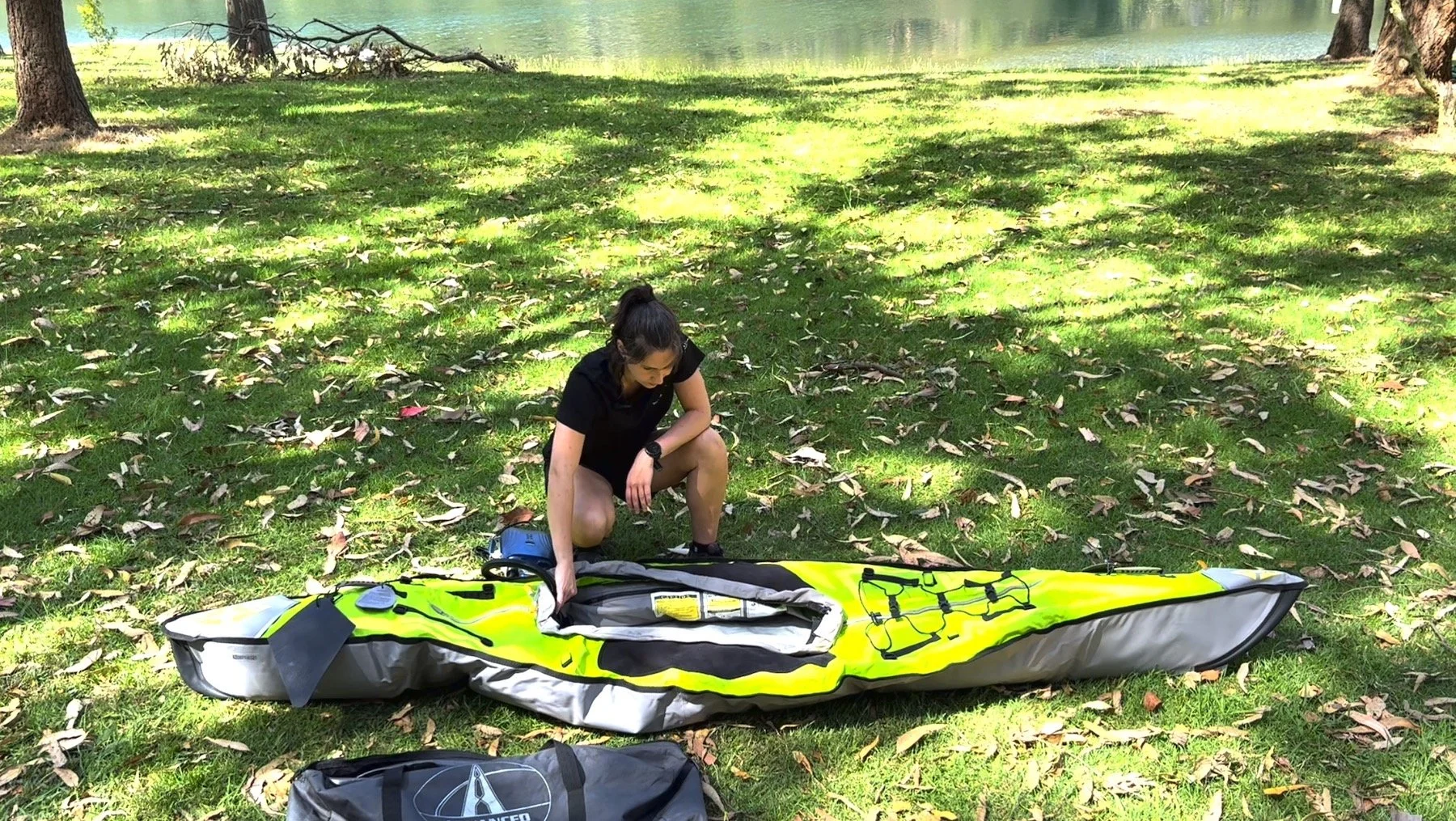
Fewer matching valves make setup much simpler, whatever pump you use. A rechargeable electric pump takes all the hard work out of inflation and slips easily into your kayak bag, so you can pump up right by the water.
That said, if it is just a short walk from the car park or train to the launch spot, we have found it is often easier to carry a fully inflated kayak than a floppy one fresh out of the bag. Rest the middle against your shoulder or use carry straps that clip onto the hull.
Paddling
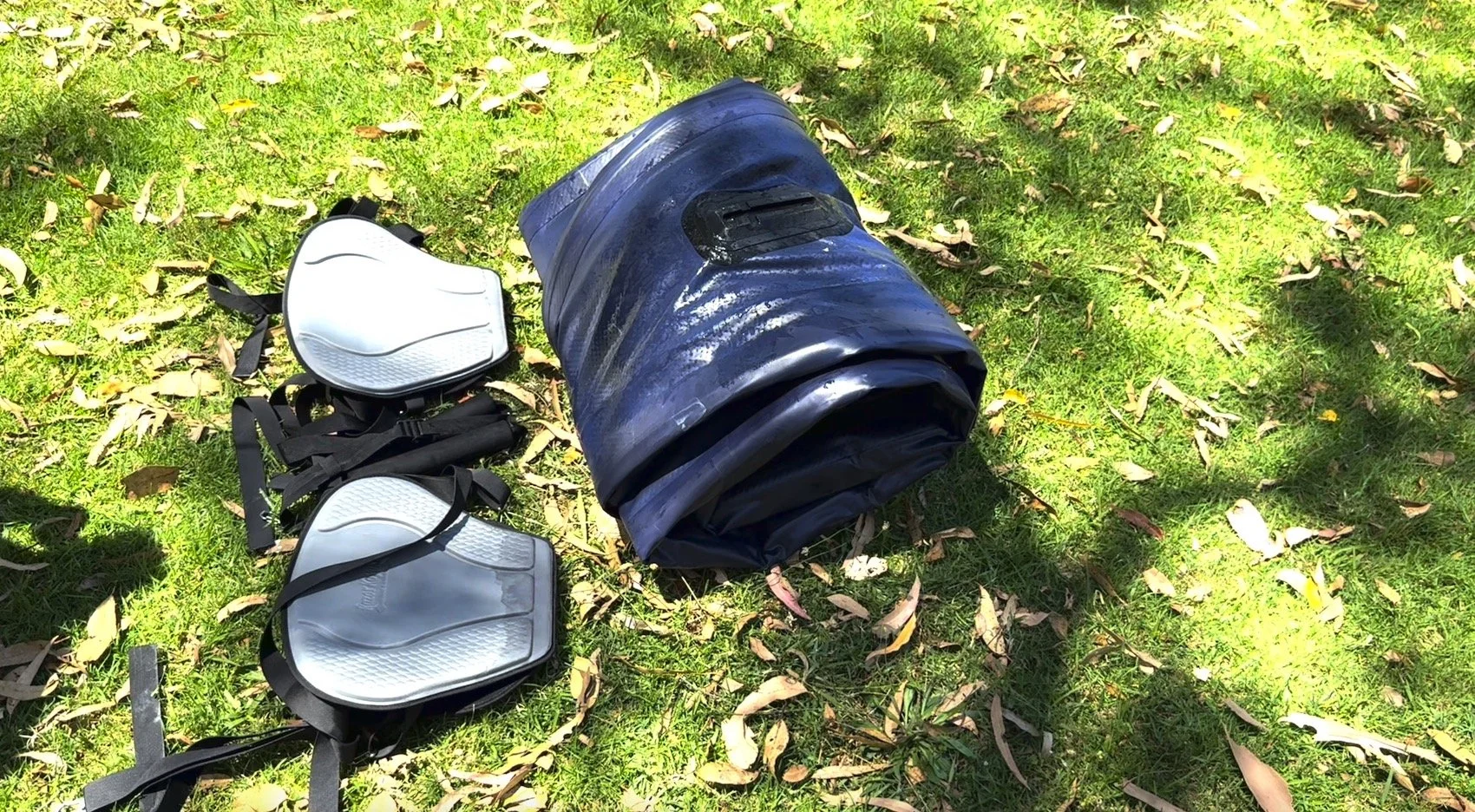
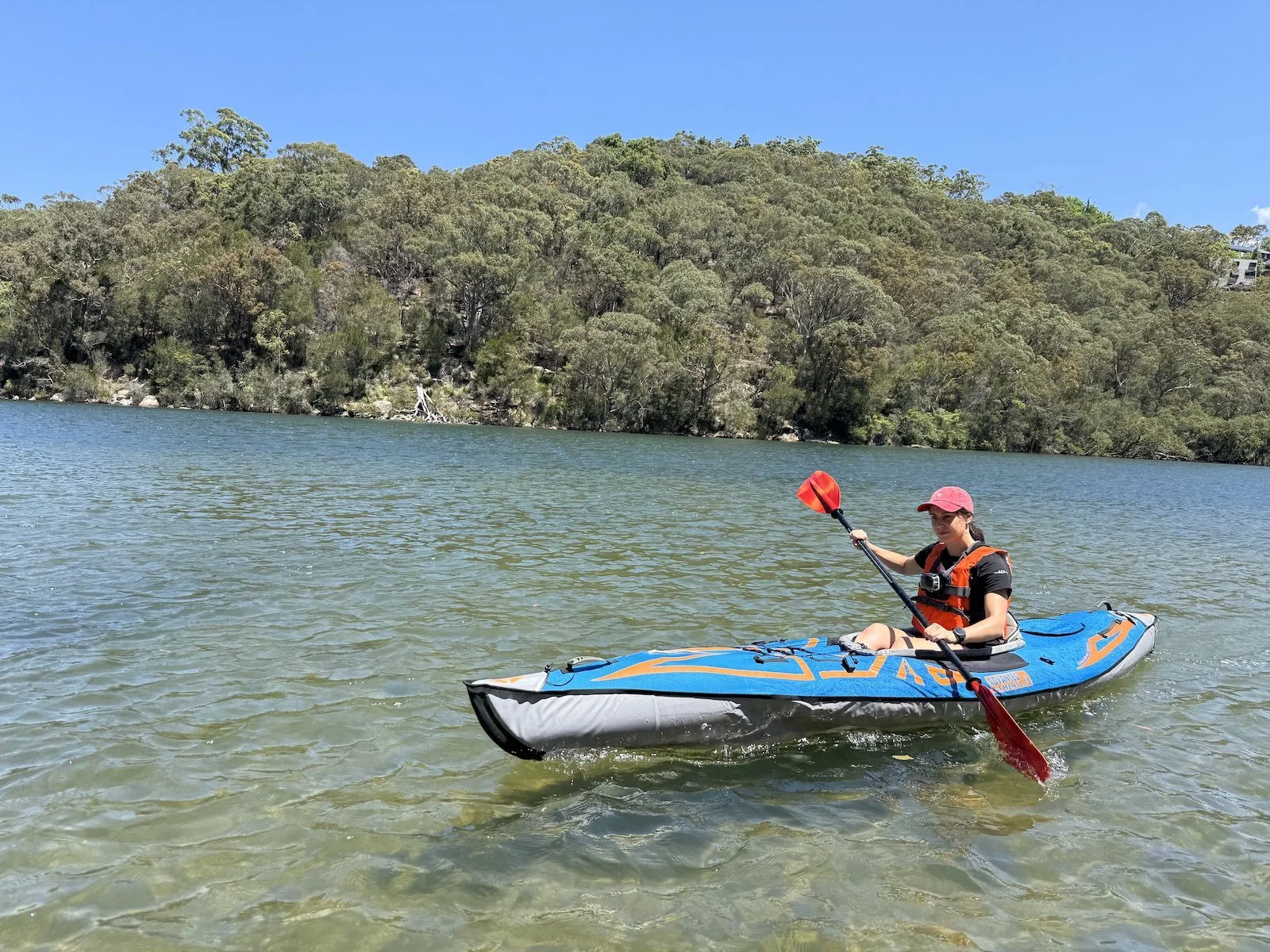
The best kayaks to paddle had these features:
A removable skeg at least 15cm long. These kept a much straighter course than models with short skegs, no skegs or ones relying just on hull shape.
At least a drop‑stitch floor, or better still a full drop‑stitch hull. Spongy floors soak up your paddle power, while drop‑stitch feels firm and direct.
Bow and stern stiffeners like nose caps, plastic sections or aluminium rods. These help the kayak slice through flat water and chop, plus add structure.
Packdown and Storage
PVC‑hulled kayaks win hands down. Fabric covers take ages to dry properly and we have had mould problems with them before, even when trying our best. PVC is much more forgiving if it goes away slightly damp.
Always roll your kayak loosely for storage rather than folding it tight. On cheaper vinyl models especially, avoid creasing right over any rigid plastic parts where the material might split.
For detailed test results and model reviews, check our best inflatable kayaks for UK waters guide.
-
Modern inflatables with drop‑stitch hulls and reinforced PVC can handle most of what hard shells do on UK waters, plus they pack away tiny for easy transport.
-
It depends on your paddling, but curved drop‑stitch hulls from Gumotex, Advanced Elements or Aqua Marina often suit UK lakes and coasts well.
-
Absolutely. They are perfect for tight storage, public transport trips and exploring lochs or rivers without roof racks.
-
No licence needed for non‑motorised inflatables under 2.5m on most inland waters. Check local rules for coastal or canal use.
-
They can feel softer without drop‑stitch, dry slower if fabric‑covered and need rinsing after saltwater.
-
Match hull shape to your use: wide with side tubes for stability, narrow drop‑stitch for distance. Check materials for durability.
-
Drop‑stitch uses threads to keep panels flat and rigid when inflated. It gives firmness, better handling and a hard‑shell feel.
-
80–95 cm wide for stability on choppy water. 75–85 cm for speed on calm stretches.
-
Most do with a removable skeg. Drop‑stitch helps them hold line in wind.
-
Reinforced PVC with drop‑stitch floor for wet weather, wind and rocky shores. Hypalon suits coastal salt exposure.
-
Most have good primary stability from wide hulls and tubes. Curved drop‑stitch adds secondary stability too.
-
A wide recreational model with drop‑stitch floor and side tubes for easy balance and forgiving handling.
-
Inflatables set up faster and are lighter. Foldables feel more rigid but take longer to assemble.
-
Yes, most deflate to 10–20kg and fit in a backpack. Inflated, carry them over one shoulder for short walks.
-
One‑person for solo (3–3.5m long), two‑person for couples or gear (3.5–4m).
-
5–10 years with good care. Reinforced PVC models often outlast basic vinyl.
-
Try the Norfolk Broads, Lake District tarns, Scottish lochs or Grand Union Canal. Check public access maps.
-
No, thick PVC and multiple chambers make punctures rare. Carry a patch kit just in case.
-
Premium drop‑stitch models are very close. Basic ones feel a bit more draggy.
-
Yes, easily with PVC glue and patches. Most kits fix small punctures in minutes.
Wrapping It Up
Once seen as basic pool toys, inflatable kayaks have come a long way and can now handle the same sorts of conditions that were once the preserve of hard‑shell kayaks. The bonus is their brilliant portability, letting you reach all sorts of tucked‑away spots around the UK.
The best models use drop‑stitch construction, tough reinforced PVC and bow or stern stiffeners. They come with a removable skeg for better straight running, plus a hull shape matched to your paddling: curved drop‑stitch for most outings, bathtub or V‑shaped for distance work, drop‑stitch floors with side tubes for beginners or stable fishing platforms.
Inflatable kayaks suit UK life perfectly, whether you are hiking to a remote Highland loch, squeezing one into a London flat or taking it on a campervan tour of the coast. They make sense for anyone short on garage space, keen to try different waterways or after something lighter to carry than a hard shell. Stick with hard shells if you always paddle the same local stretch and have space to store one at home
For more information about inflatable kayaks and in-depth field testing on specific kayak models available in the UK, head to our best inflatable kayak or best 2-person inflatable kayak pages.